 English
 Deutsch

Tamir Moves into High-Volume Digital Folding Carton Production with Koenig & Bauer Durst’s VariJET 106
Polish packaging manufacturer adopts hybrid production model to boost efficiency and significantly reduce waste
- Long-established Polish packaging producer takes significant strategic step from a purely offset environment into industrial-scale digital production
- Clear short-run and medium-run business case supports lower waste, lower production costs and improved overall pressroom efficiency
- Production due to start at the end of August following installation and training
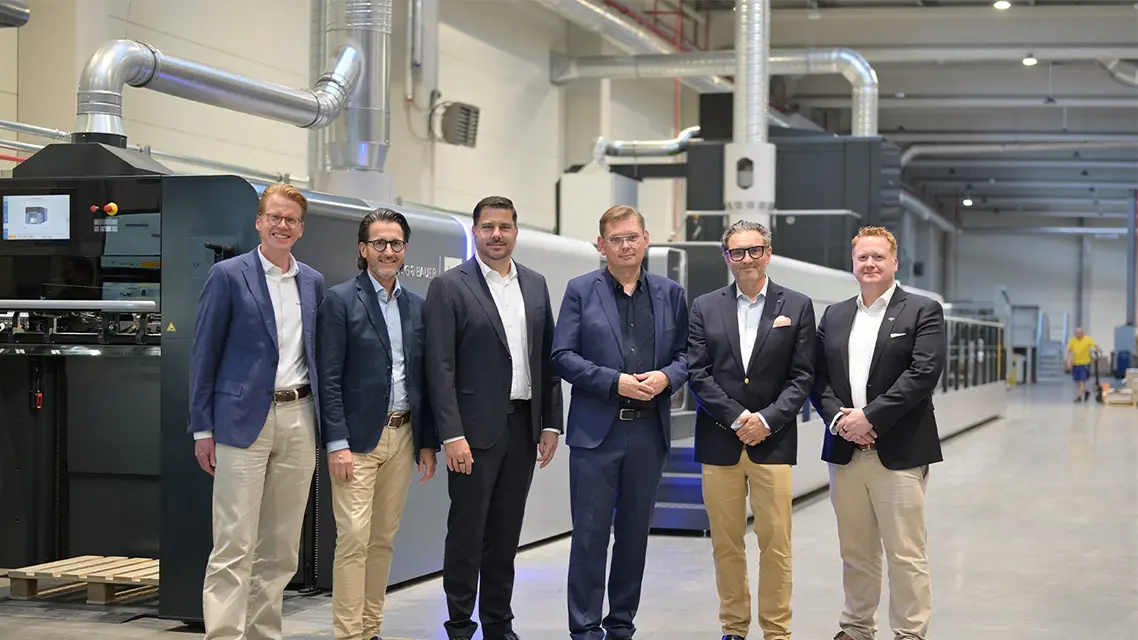
Drukarnia Tamir, a long-established Polish packaging producer with deep roots in conventional offset, is set to begin high-volume digital folding carton production with the Koenig & Bauer Durst VariJET 106 at the end of August, following installation and training. The move represents a significant strategic step for the family-owned company, which has built its business over more than 30 years on offset-based production of folding cartons, laminated corrugated packaging and leaflets. Founded in 1993 and now led by the second generation of the Krywulec family, Tamir serves customers in the pharmaceutical, cosmetics, food, automotive and appliances sectors across Poland and Europe.
For a company coming from a purely offset environment, Tamir’s decision to move directly into industrial-scale digital folding carton production is an important statement – and further proof that digital is moving from discussion to implementation in mainstream packaging production.
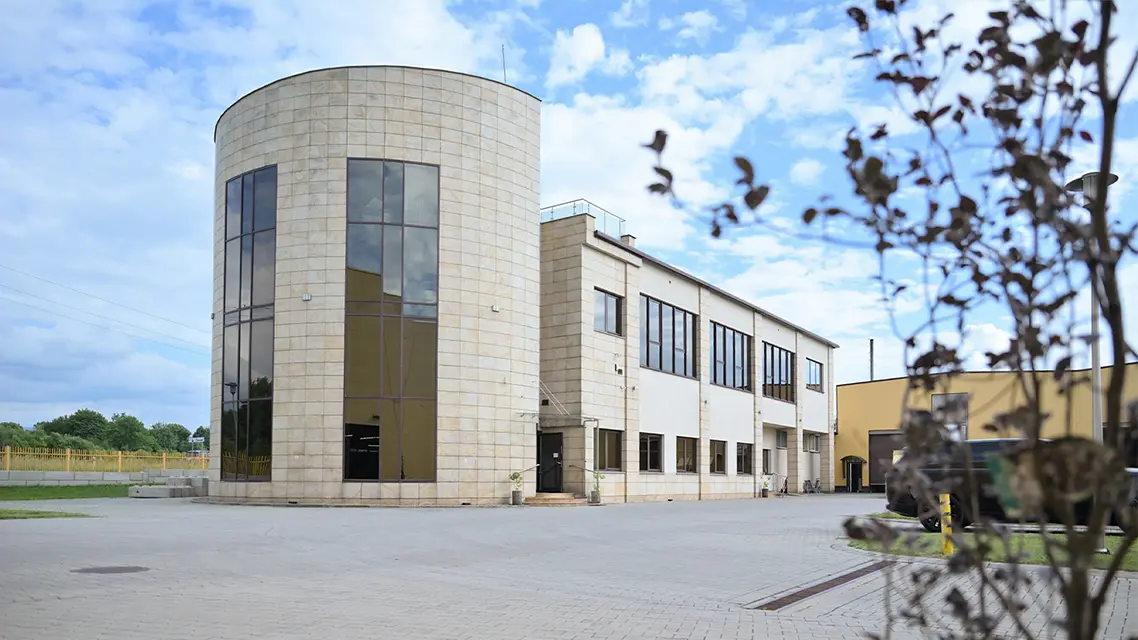
Tamir operates from two specialised production sites in Bystrzyca Klodzka, with a third facility currently under construction as part of its continued expansion. The company’s near 20,000 square metres of production and warehouse space support a broad and highly specialised packaging portfolio. One site focuses primarily on pharmaceutical packaging, pharmaceutical leaflets and premium, highly finished cartons for food and confectionery brands. The second site is dedicated mainly to automotive packaging production. Tamir also operates a B0-format line for laminated microflute packaging, alongside a high-end offset pressroom and advanced post-press capabilities. This production set-up enables the company to combine high-volume, high-precision manufacturing with premium finishing, flexibility and reliable supply for demanding customers across multiple industries.
At Tamir, the VariJET 106 is being introduced based on a clear short-run and medium-run business case. The hybrid press will replace older offset capacity for more than 3,600 short- and medium-run jobs and over 5.6 million sheets annually. It is expected to enable production previously requiring two offset shifts to be handled in one VariJET shift.
The investment is forecast to generate six-figure euro annual waste savings and reduce production costs significantly per year. In addition, the remaining VariJET 106 capacity is expected to relieve Tamir's other nine offset presses from inefficient short- and medium-run work, further improving overall equipment efficiency and creating additional capacity across the pressroom.
“This is a significant strategic step for Tamir,” Michal Krywulec, President of the Management Board of Tamir. “From the beginning, I had one key requirement: our digital press had to complement our offset production, not replace it. It had to be fully compatible with our existing workflow and, most importantly, capable of printing on the same carton substrates that we already use in offset production. This allows us to switch between technologies depending on the customer's needs while maintaining the same quality standards and production flexibility.”
“I closely followed other technologies that came to the market. While they were impressive innovations, they didn't fully meet our requirements in terms of compatibility with our production model and the range of substrates we wanted to process. When Koenig & Bauer Durst introduced the VariJET concept, it was the first solution that matched the vision I had for digital packaging production. It combines the flexibility of digital printing with the industrial capabilities and substrate compatibility we were looking for. That's why we decided that VariJET was the right investment for Tamir.”
Mr Krywulec added: “We come from a purely offset environment, so our decision to move into high-volume digital folding carton production was based on a clear business case and a view of how we want to develop our production in the future.”
“The VariJET 106 gives us the opportunity to handle short and medium runs more efficiently, improve flexibility across the entire pressroom, streamline production processes and optimize our cost structure. It also opens up new possibilities in areas such as variable data printing and allows us to respond more quickly when customers need urgent repeat work or short-run jobs. One example was a recent order for 70,000 folding cartons, where the customer later needed 250 additional boxes immediately. We were able to produce them quickly on the VariJET, without the two-hour setup time that offset would have required and with virtually no waste. From my perspective, the print quality is outstanding - and in certain applications can even surpass offset. For us, this is not about replacing offset, but about adding the right digital capability to run alongside our offset production, support a wider range of applications, and help drive the next stage of our growth.”
For Koenig & Bauer Durst, Tamir is an important example of how established folding carton producers are adopting digital where it delivers measurable operational and economic value. Rather than positioning digital as a niche solution, the installation underlines how hybrid production can be integrated into real industrial environments to improve flexibility, efficiency and competitiveness.
“Tamir is a strong example of how digital is moving from discussion to implementation in folding carton markets. This is an established, highly capable offset packaging producer making the move into industrial-scale digital production because the business case is clear,” said Daniel Velema, Managing Director of Koenig & Bauer Durst. “The VariJET 106 was designed exactly for this kind of environment – real production, real efficiency gains and real integration between digital and offset.”
Markus Weiss, CEO of Koenig & Bauer Paper & Packaging, said: “For too long, digital printing has been seen as a niche solution for limited applications. Tamir's decision sends a strong signal that the market is ready to use digital where it creates measurable value in industrial folding carton production. This is not about replacing offset. It is about combining the strengths of offset and digital to create a more flexible, more efficient and more competitive production setup.”
The VariJET 106 combines Durst’s digital water-based inkjet printing and software with the market-leading performance of the Koenig & Bauer Rapida 106 platform. Developed jointly by Koenig & Bauer and Durst, the single-pass press is designed for real production, not niche applications, helping folding carton converters address short and medium run lengths with greater flexibility, consistent quality and competitive economics.
For Tamir, the investment also reflects a broader strategy of continuous development, innovation and long-term stability. The company remains fully family-owned, with executive leadership in the hands of Michal Krywulec, CEO, his sister Adriana Krywulec, and their mother Eugenia Krywulec, reinforcing its long-term commitment to customers, employees and market development.

Jessica Zobjack
Management Assistant & Marketing Lead
+49 931 909 4344
Koenig & Bauer Durst
Friedrich-Koenig-Str. 4
97080 Würzburg