English
 Deutsch

What Is Behind the 'New Adult' Book Hype?
BACK TO THE BOOK
Sometimes, paper is more than just a carrier of ink. In a world that is digitalising at an ever-increasing pace, a new generation of readers is longing for the tangible, the aesthetic, and the immediate. The 'New Adult' genre has not only woken up the book industry but triggered a revolution. It is all about big emotions, identity and – perhaps most surprisingly – the book as a haptic object of art. With embossing and elaborate finishes, reading becomes an event. We want to take a look behind the scenes of this hype – from the emotional creation in the mind of a bestselling author to the technical precision work on the printing presses of Koenig & Bauer, which make these dreams tangible in the first place.
The architect of emotions
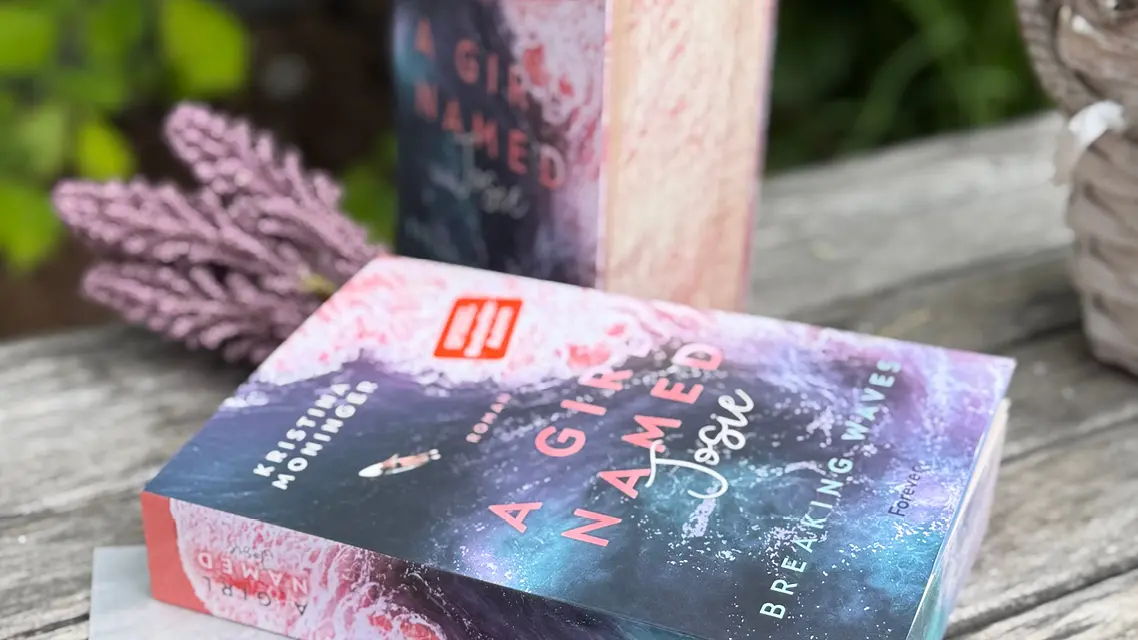
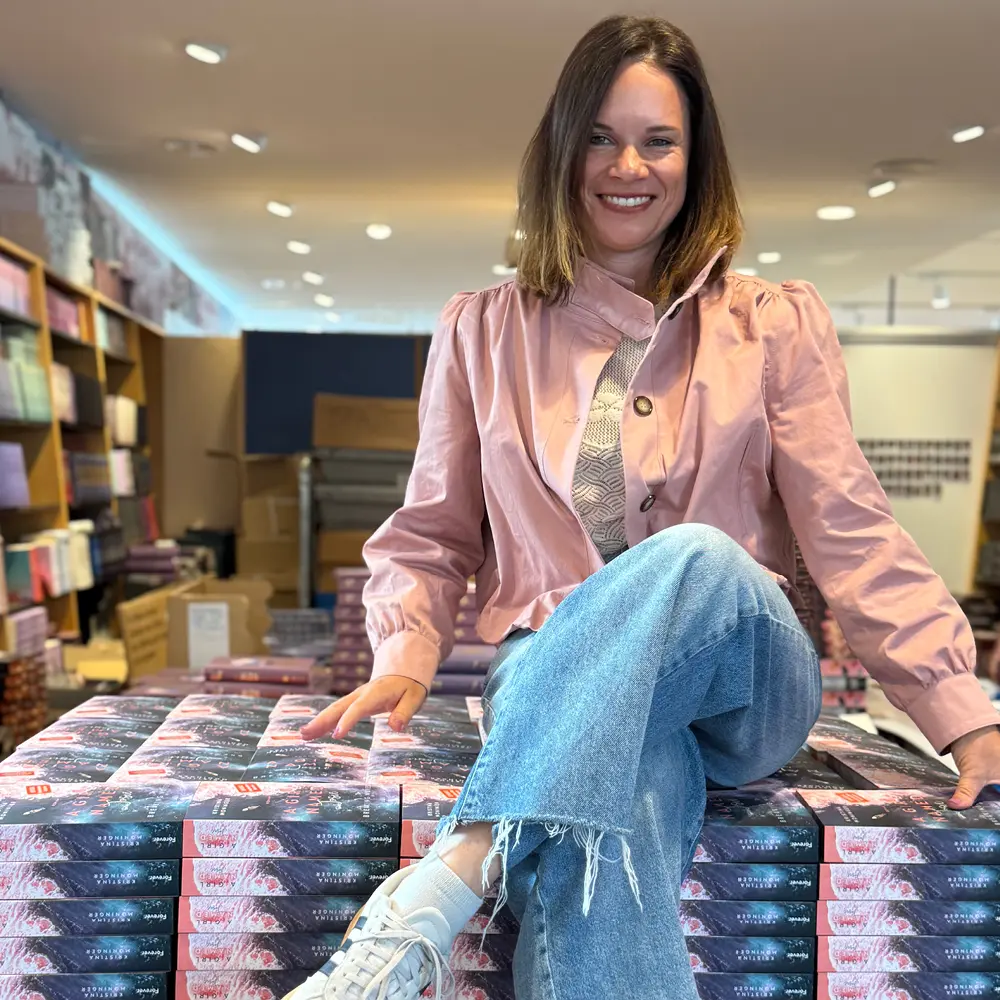
Kristina Moninger, born in Würzburg in 1985, has firmly established herself in the literary scene as a #1 Spiegel bestselling author. With 16 successful books now under her belt – including the celebrated Breaking Waves series – she understands like few others how to capture the inner conflict and hope of an entire generation in gripping words. In this interview, she speaks about the book as a 'safe space' and why the exterior is what truly dresses a story.
Ms Moninger, New Adult is often described as a 'safe space'. What makes this space between the book covers so special for your readership?
I think what really makes New Adult special for many readers is the feeling of finding themselves in the stories. Reading is always a bit of escapism, in the best possible sense. When I hold a book in my hand, I can imagine being in a completely different place and living another life. But when the story appeals to my emotions, makes me think, or tackles topics that move me personally, then a book has really hooked me. With New Adult, the reality of young women's lives was mapped out in all areas for the first time. Many simply didn't feel represented in literature before. The mixture of serious themes and romance has made its way into the hearts of readers, and that is fantastic.
To be honest, it's not just New Adult, but romance in general that tends to be looked down upon, both by the cultural pages and by... men. Yet I often think to myself, what is more important in life than love? We all long to receive and give love. So, we enjoy reading about it too.
How important is the visual design of your book to you personally?
'To me personally' makes the question difficult. First and foremost, the visual design is one thing: a selling point. And as such, it is naturally important to me. When I buy a book for myself, I'm also more likely to pick up a cover that appeals to me than one that doesn't. The story is and remains the most important thing for me, but of course, it can and should be well-dressed.
Have readers' expectations changed? Is a good story still enough today if the exterior isn't convincing?
The problem is rather: will a good story be bought if the exterior isn't appealing? I think that is the first hurdle that needs to be overcome, both online and in high-street retail. The book has to entice customers to read the blurb, and if that is convincing too, then you've done everything right to begin with. As soon as readers dive into the book, I would argue that the exterior becomes secondary. So, you have to create an incentive to buy and then, of course, convince them with the story. After all, I don't write to squeeze a story between two beautiful book covers, but to create pictures in people's minds.
And expectations – yes, they have definitely changed, but that is also simply due to the design options and what is on offer. If you can get a beautifully designed sprayed edges, why not? Or a special edition of a favourite book. By now, this has long since spread beyond the New Adult bubble and has been adopted by other genres.
How does it feel for you when you hold your work in your hands, printed and finished for the first time?
It is an incredible feeling every single time. At first, the story only exists in my head, and then digitally. Even the galley proofs – the hard-copy proofs from the publisher for a final check before printing – are a first step. On paper, it just always looks more like a book. And when you hold it in your hands, the effect loses none of its magic, even after 16 books.
New Adult fans often present their books like works of art on social media – keyword: BookTok. When you draft a scene, do you already have the visual presentation in mind?
You could certainly get that impression from BookTok, couldn't you? But at least for myself, I can answer clearly: no. When I plot and write a story, I never have in mind how it will look later on TikTok or what taglines will come out of it for Insta. Of course, I also visualise my scenes and protagonists, but only ever to spin a story that is as gripping and authentic as possible. Sometimes during editing, I mark individual passages and think that they could be used for social media. But that only happens right at the very end, when the book is virtually finished.
Why do you think young people are increasingly turning back to printed books despite Netflix and social media?
I think there are several reasons. The printed book has definitely become something of a collector's item. People put them on their shelves, sort their books by colour, and can present a printed book more beautifully in photos – and social media plays a huge role in that. Although reading is inherently a solitary hobby, Instagram and TikTok have changed things quite a bit. Readers exchange ideas with others, virtual friendships are formed, and these not infrequently turn into real friendships. Added to that, the analogue reading experience is completely different. In a digital world, a printed book is a bit like a holiday for the mind. And even if it sounds very romanticised now: I wouldn't want to miss the rustle of the pages and the smell of paper. Many readers use coloured Post-it notes to mark passages and say they have a better sense of orientation with a printed book. I feel the same way: a story I've read in print stays in my mind longer. What a lovely development, right? And what a relief for the smartphone neck.
Where do you get the inspiration for the topics that move an entire generation so deeply?
It sounds both a bit simple and cliché now, but it's true: from life. I collect bits and pieces in everyday life, I am open to everything new, and I incredibly enjoy observing. A lot flows indirectly into my books. My great curiosity about life is probably helpful too.
What do you think: did the aesthetics of the books make the genre so big in the first place, or was it the story?
Undoubtedly the stories – that feeling of being seen that I mentioned earlier. It does justice to neither the genre nor the readers to accuse them of buying the books just for the glitter. As far as aesthetics are concerned, they certainly helped, but the hype started before sprayed edges existed and before every book came with at least two extras. I think we really need to move away from reducing New Adult to externalities – to this hundred times repeated line about 'soft porn in pastel'. It always amazes me that this isn't questioned at all in other genres. No one says: did the aesthetics of large, impressive lettering on dark, suspenseful images make the thriller big? Ultimately, you can say: the readers made this genre big because they rediscovered (or newly discovered) a love of reading.
The alchemists of print
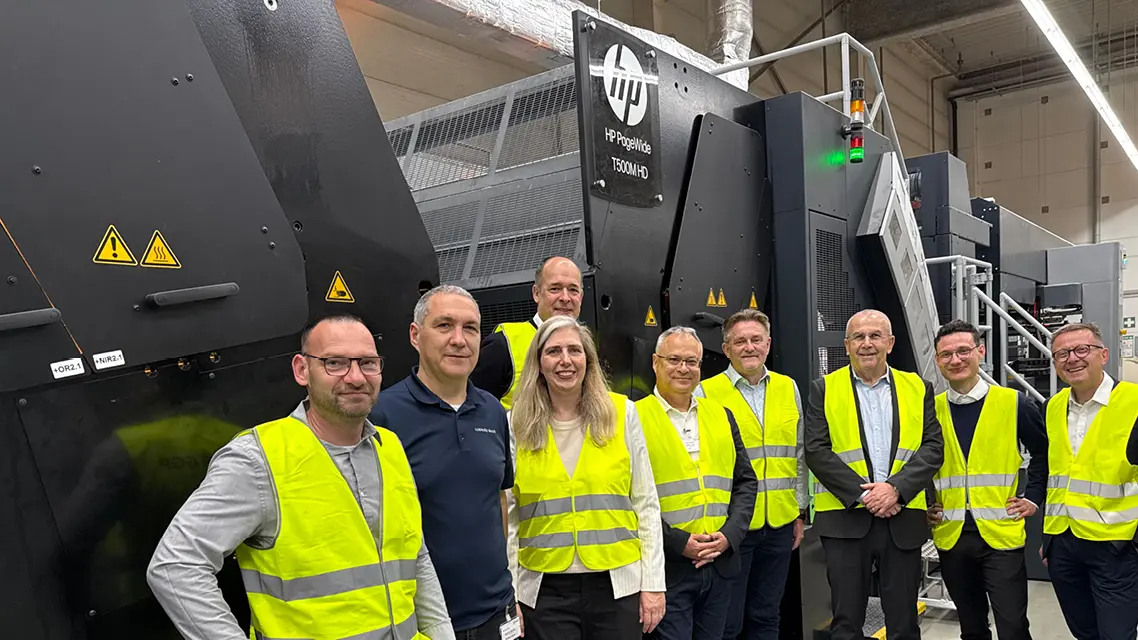
When emotions take shape, GGP Media GmbH in Pößneck is one of the most important settings in the industry. As a true heavyweight in book production, the company relies on future-oriented technologies to serve the booming market efficiently. A recent milestone of this innovative strength is the latest expansion of their machine park to include an HP PageWide Web Press from the T500 series. This was developed in successful cooperation with Koenig & Bauer and officially accepted in April 2026 after a spot-on landing by the installation team. Martin Hawich, Head of Production & Technology at GGP Media, explains how this state-of-the-art solution combines maximum flexibility, quality and cost-effectiveness in live operation.

Mr Hawich, New Adult books today often look more valuable than classic premium hardbacks. How has this trend changed your production?
The development is indeed remarkable. We are seeing a significantly increasing demand for high-quality finishes and special features – from elaborately designed sprayed edges to embossing, spot varnishing or special binding materials. The book is increasingly perceived as a collector's and lifestyle product and is meant not just to be read, but also to be shown off and collected.
For production, this means much higher demands on quality, precision and variety. Printing, finishing and quality control must be even more closely linked today so that the final product meets the high expectations of readers. At the same time, investments in modern technologies and automation continue to gain importance.
GGP Media relies on technology from Koenig & Bauer. What share does the precision of these machines have in making such haptic highlights economically viable in the first place?
A very large share. Sophisticated finishes require high register accuracy and absolute process reliability. These products can only be manufactured economically if print images match exactly and the quality remains constant across the entire production run.
The strength of modern machines lies in the fact that they combine high quality with speed and stability. It is precisely this combination that creates the necessary cost-effectiveness. Furthermore, technological partnerships with manufacturers like Koenig & Bauer are an important success factor because they enable innovations and continuous optimisation.
Particularly with high-quality books, even the smallest deviations become visible and are noticed by the customer. Finishes only work perfectly when all process steps are precisely coordinated with one another. Process stability ensures that quality becomes reproducible – regardless of whether we produce a few thousand or several hundred thousand copies. This is a basic prerequisite for high-quality book products.
Keyword efficiency: how do you manage the balancing act between extremely high-quality finishing and the high print runs of bestsellers?
The key lies in a high degree of automation along the entire value chain. Modern production systems enable us to combine quality and productivity. In addition, we rely on standardised processes that map even complex finishes efficiently. With high print runs, additional economies of scale come into play. This allows us to manufacture even sophisticated products in large quantities economically.
Do you see this trend towards the "premiumisation" of the book as a long-term rescue of the print market?
I wouldn't speak of a rescue, because the printed book possesses qualities of its own that digital media cannot replace. Books offer emotional and haptic experiences that readers continue to value.
However, premiumisation is an important growth driver. High-quality features increase the attractiveness of the product and create added value. Many readers are willing to pay more for special editions. In my view, this trend will establish itself in the long term, especially in certain genres. At the same time, innovation and efficiency remain crucial factors for the future viability of the market.
New Adult books often have to be delivered within very short time windows (hype cycles). How does the reliability of your equipment help you with this time pressure?
High equipment availability creates planning security. Short setup times and high production speeds enable us to react very quickly to fluctuations in demand and to meet tight delivery windows. At the same time, stable and reliable processes minimise production risks. Ultimately, this also benefits the publishers, who can rely on a high level of delivery reliability.
You have just expanded your machine park with an HP T500M HD: to what extent does this solution offer the capacities that the modern book market demands today, and how does this step secure GGP Media's decisive edge over the competition?
With the HP T500M HD, we are specifically expanding our production capacities for the demands of a market that requires more and more speed, flexibility and variety. The machine combines high productivity with excellent print quality while simultaneously enabling the economic production of small and medium print runs.
As such, it complements our existing production portfolio perfectly and strengthens our ability to map a wide variety of customer requirements efficiently. For us, the investment is an important step towards remaining competitive in the future and offering our customers maximum flexibility.