 English
 Deutsch

Tamir and Koenig & Bauer Present Industrial Business Case for Digital in B1 Folding Carton Production
Polish packaging manufacturer becomes the evidence: more than 3,600 jobs are being moved from offset onto the VariJET 106
- One VariJET 106 taking the production of two full offset shifts, with six-figure annual savings
- Projections based on customer’s own number rather than a vendor benchmark
- Live operation under real production conditions with actual print jobs
© Wojciech Mataczyński, Mataczyński Media & Storytelling
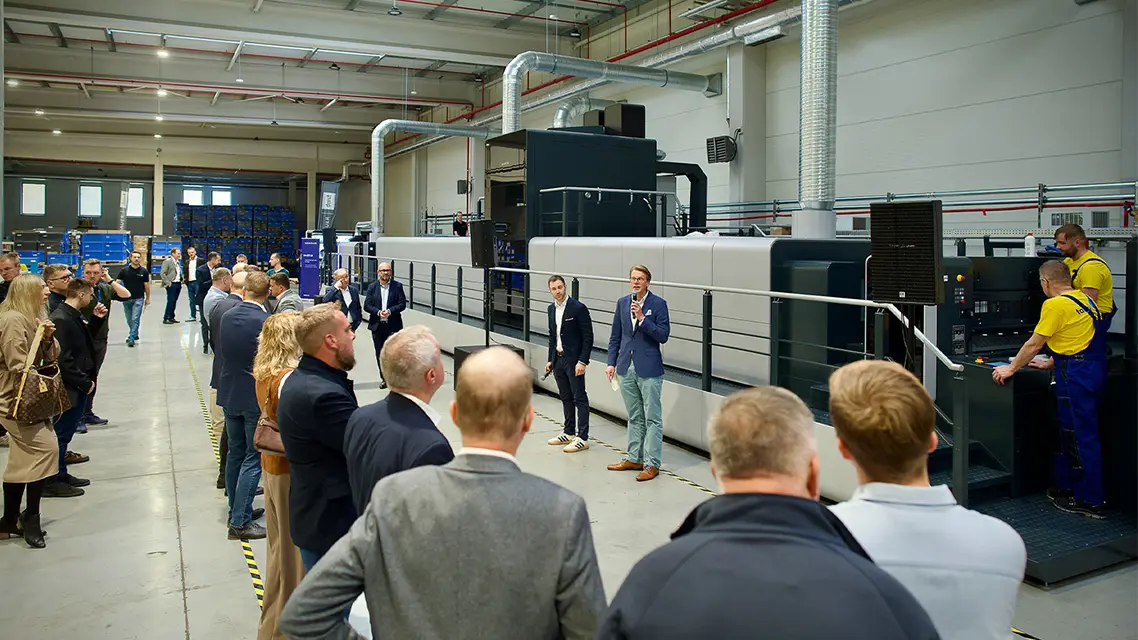
Drukarnia Tamir is delivering definitive industrial proof that the short and medium runs compromising the overall equipment effectiveness of large B1 offset lines can be solved profitably. The Polish packaging producer is moving more than 3,600 jobs entirely off its offset presses and onto a Koenig & Bauer Durst VariJET 106, freeing capacity on its remaining nine offset presses and rewriting the economics of its pressroom.
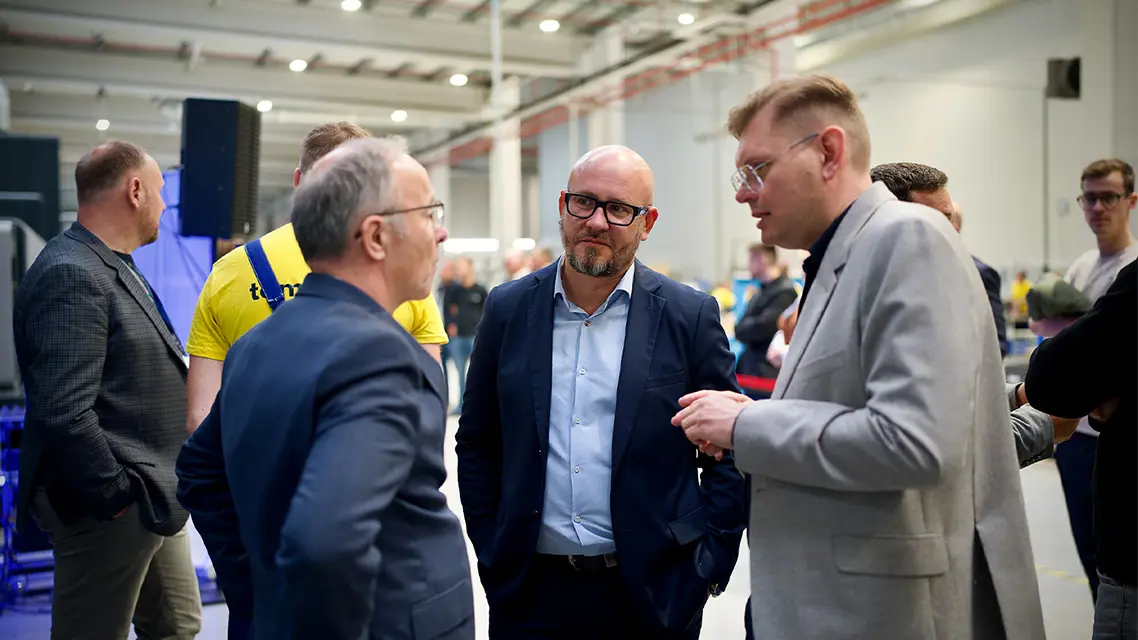
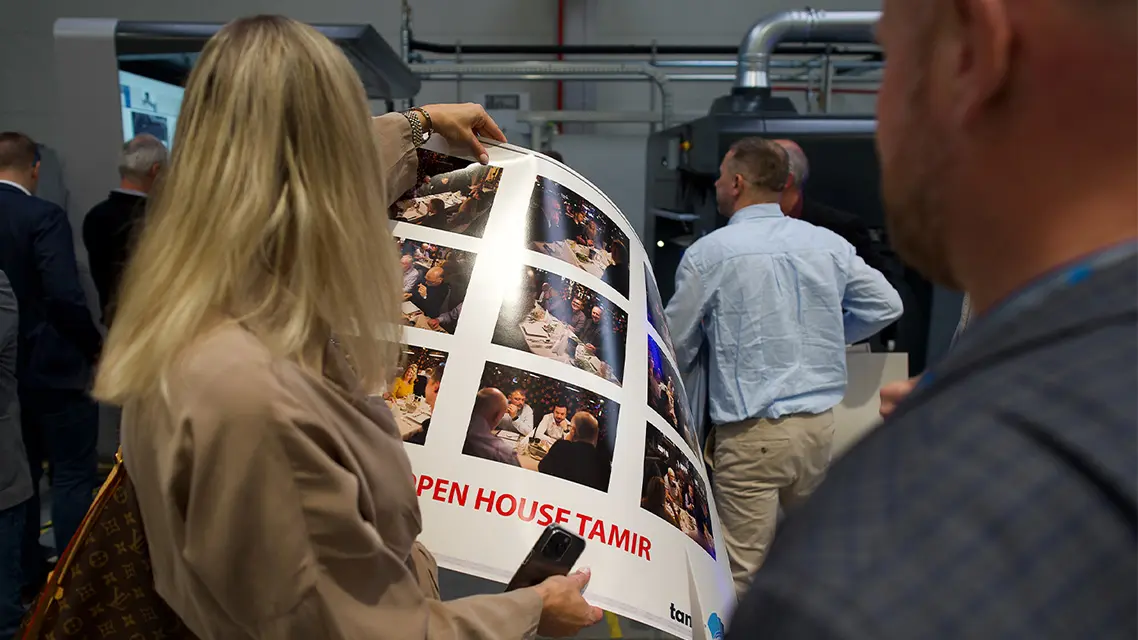
The results were presented to packaging executives at a Digital Packaging Executive Day hosted by Koenig & Bauer and Koenig & Bauer Durst at Tamir’s headquarters in Bystrzyca Kłodzka, one of the company’s two production sites. The programme combined a factory tour, an end-to-end business case explanation on a real live example, a deep dive at the press, a module on next-level brand protection, and executive networking throughout the day.
© Wojciech Mataczyński, Mataczyński Media & Storytelling
The proof is on the press, not the screen
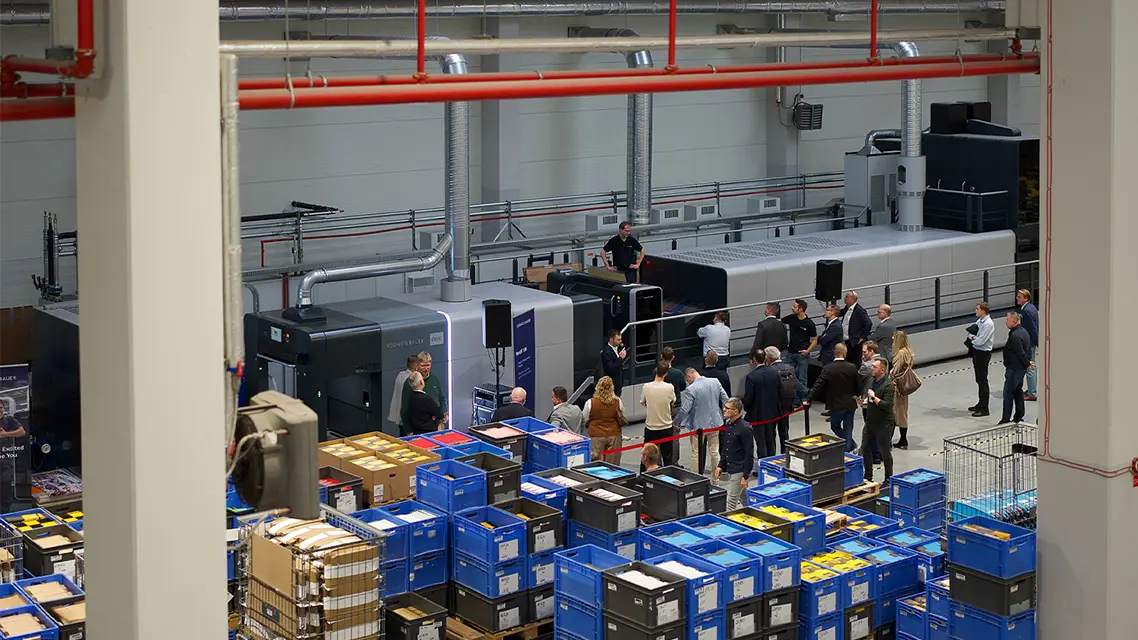
The most persuasive evidence came from the press itself. The demonstration had to wait while four live commercial jobs were completed on the VariJET 106, giving delegates a genuine view of continuous job changeovers under authentic production conditions.
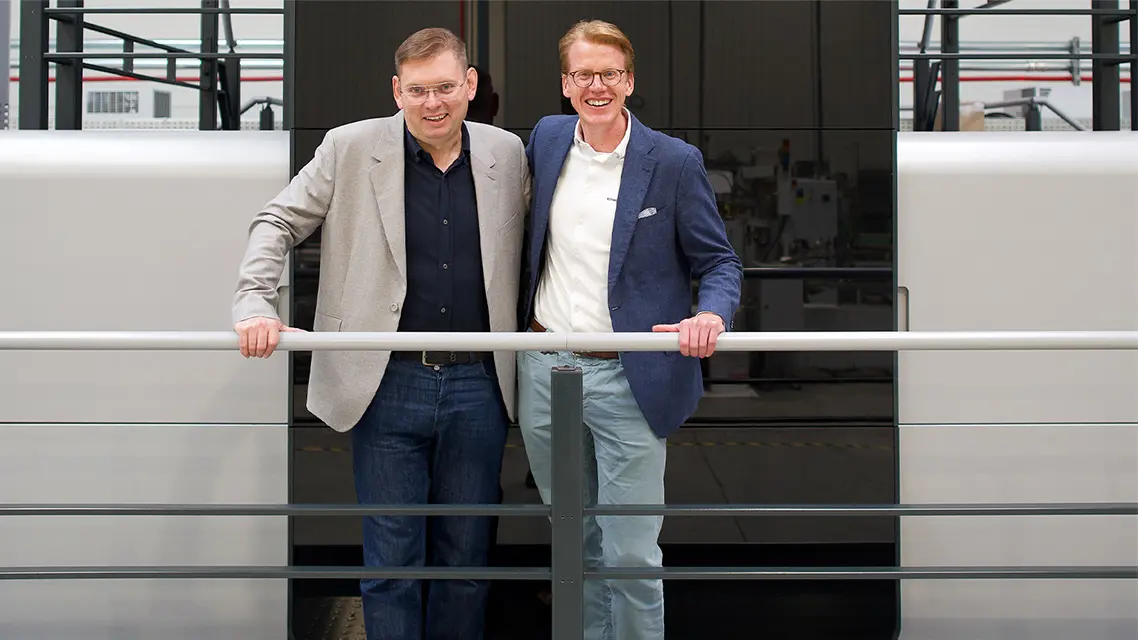
“The VariJET 106 is a game changer for us,” said Michał Krywulec, President of the Management Board of Tamir. “From the beginning, I had one key requirement: our digital press had to complement our offset production, not replace it. It had to be fully compatible with our existing workflow and, most importantly, capable of printing on the same carton substrates that we already use in offset production. This allows us to switch between technologies depending on the customer's needs while maintaining the same quality standards and production flexibility."
He added: “I closely followed other technologies that came to the market. While they were impressive innovations, they didn't fully meet our requirements in terms of compatibility with our production model and the range of substrates we wanted to process. When Koenig & Bauer Durst introduced the VariJET concept, it was the first solution that matched the vision I had for digital packaging production.”
© Wojciech Mataczyński, Mataczyński Media & Storytelling
Digital and offset as complementary technologies
Tamir's investment rests on a deliberate strategy of complementarity rather than substitution – a point reinforced throughout the day by Koenig & Bauer, whose reputation as a technology leader has been built on its offset presses.
“The world is changing fast, and it is changing towards digital," said Daniel Velema, Managing Director of Koenig & Bauer Durst. "There is no shortage of business opportunities for converters who are open-minded enough to take them. The VariJET 106 is not a replacement for offset – it is a tool that makes offset work better, because it takes away the work offset was never designed to do efficiently. The wider print manufacturing digitisation - among other changes driven by AI - will further enhance how this press can deliver to Tamir.”
© Wojciech Mataczyński, Mataczyński Media & Storytelling
Proving the business case decision with the customer’s own numbers
Maik Laubin, Vice-President Sales, Digital Printing Solutions for Koenig & Bauer, framed the day around the discipline that separates a technology purchase from a transformation.
“Digital transformation is not a technology decision, it is a business decision – and we insist on proving it that way," said Laubin. "Each business case is different, so the team builds studies around the customer's own budgets, volumes, plate and ink costs, storage and energy consumption. On average, we see that we are more cost effective than offset with run lengths up to 5,000 sheets, and there are obviously jobs that an offset press cannot even print by itself.”
Mr Laubin explained that, with Tamir, the figures show in black and white that thousands of hours of set-up time are saved each year, annual six-figure cost savings can be achieved, and significant reductions in waste and CO₂ emissions can be realised. With inefficient short runs no longer tying up the press, millions more sheets of offset printing capacity are also freed up.
© Wojciech Mataczyński, Mataczyński Media & Storytelling
Opening new, high-margin business models
In addition, the digital print manager of a renowned packaging converter operating the VariJET 106 shared compelling practical insights into their investment, emphasizing how drastically reduced makeready times delivered a tangible competitive edge and offering the audience a clear, real-world perspective on daily operations.
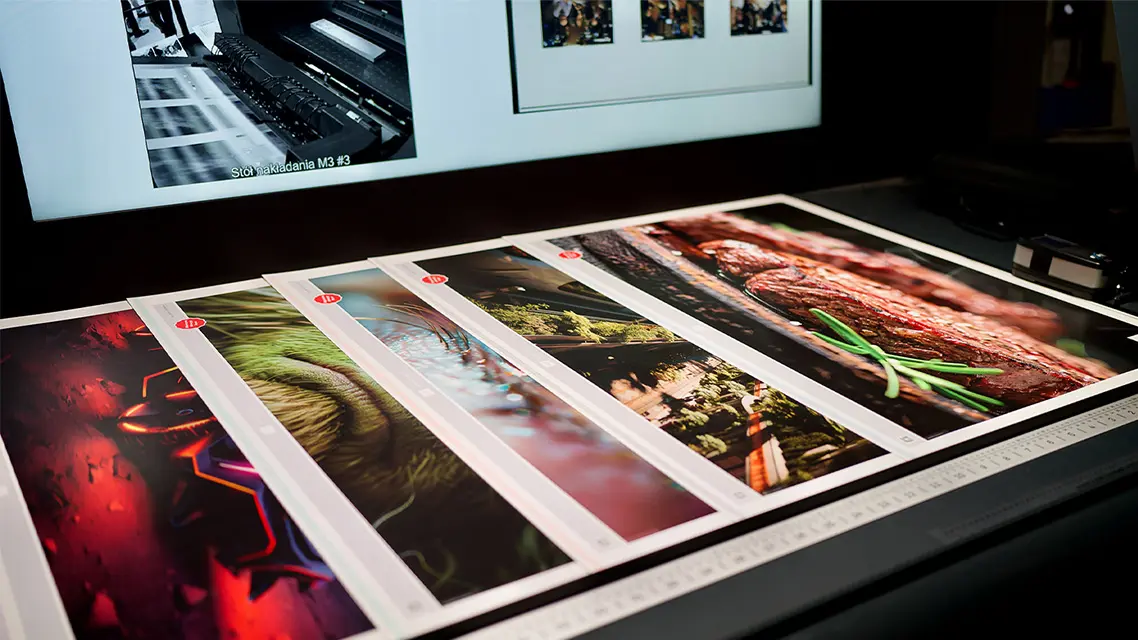
Another highlight was the live demonstrations of Koenig & Bauer Vision & Protection’s ‘protected at print’ technology. These showed how security and brand protection features can be applied directly inline during the printing process, opening up lucrative, high-margin business opportunities for print service providers. The water-based inks used in the VariJET 106 comply with the strict European migration and safety limits for food-contact materials. Furthermore, the expanded colour gamut of the digital printing unit (CMYK plus OGV) covers the vast majority of Pantone spot colours. Print quality on several applications now matches, or in certain cases, exceeds offset - and some brands are now specifically requesting that their work be produced on the VariJET 106.
As Mr Krywulec remarked to guests, “Sometimes we even have to reduce the print quality on the VariJET 106 to support production shifts between offset and digital. With the VariJET 106, print quality is no longer a bottleneck in digital printing.”
Tamir is now looking to build on the platform’s workflow integration possibilities by establishing its first webshop. The workflow can support all this by allowing the easy cost estimation and data processing of hundreds of jobs per week. There is extensive prepress, workflow and application engineering support available to support the smooth, swift transfer of each job onto the machine.
© Wojciech Mataczyński, Mataczyński Media & Storytelling
Side by side, on the same floor
An extended open Question & Answer session closed the day, covering ease of use, energy consumption and costs, substrates, ramp-up times at Tamir, prepress investment, and – repeatedly – the question of how digital and offset sit alongside one another. The answer from the Tamir plant floor was unambiguous: side by side.

Colin Harding
Marketing & Communications
+44 7730 435400
Koenig & Bauer Durst
Friedrich-Koenig-Straße 4
97080 Würzburg
Germany