 English
 Deutsch

Koenig & Bauer Rapida 76 Gives Rutgers Packaging the Crucial Efficiency Boost in Packaging Printing
Productivity Increase Thanks to Automation, High-End Technologies, and Extended Colour Gamut
- Dutch folding carton specialist Rutgers Packaging installs the Rapida 76 in half format to meet the growing demand for sustainable packaging
- Massive increase in productivity thanks to high levels of automation and the adoption of high-end technologies from larger formats
- Extended Colour Gamut saves time-consuming colour changes
© Koenig & Bauer
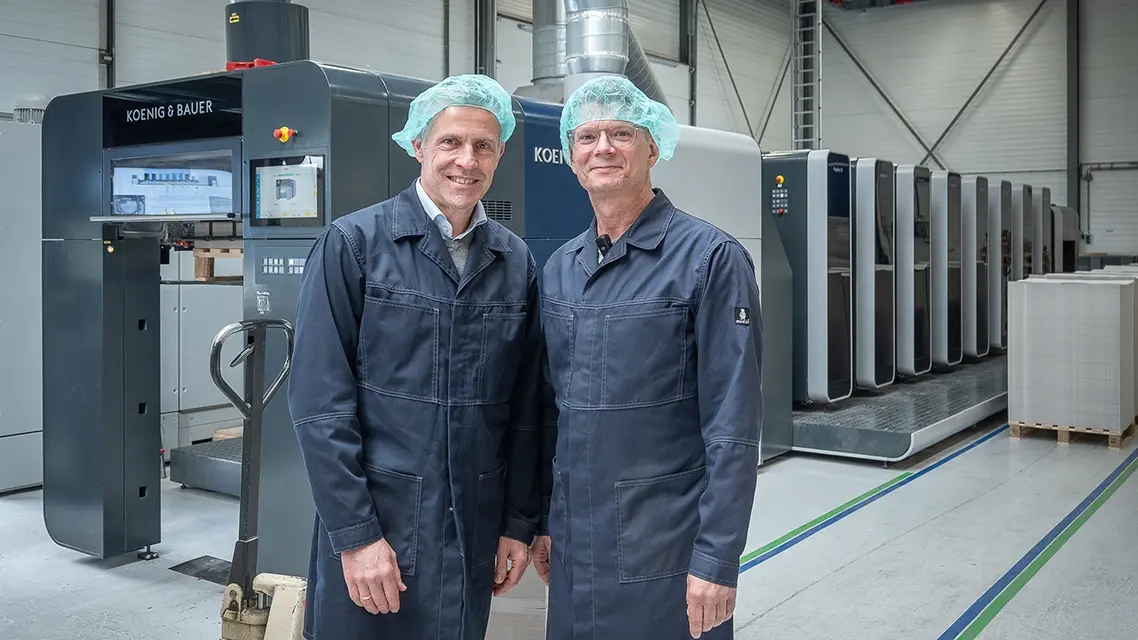
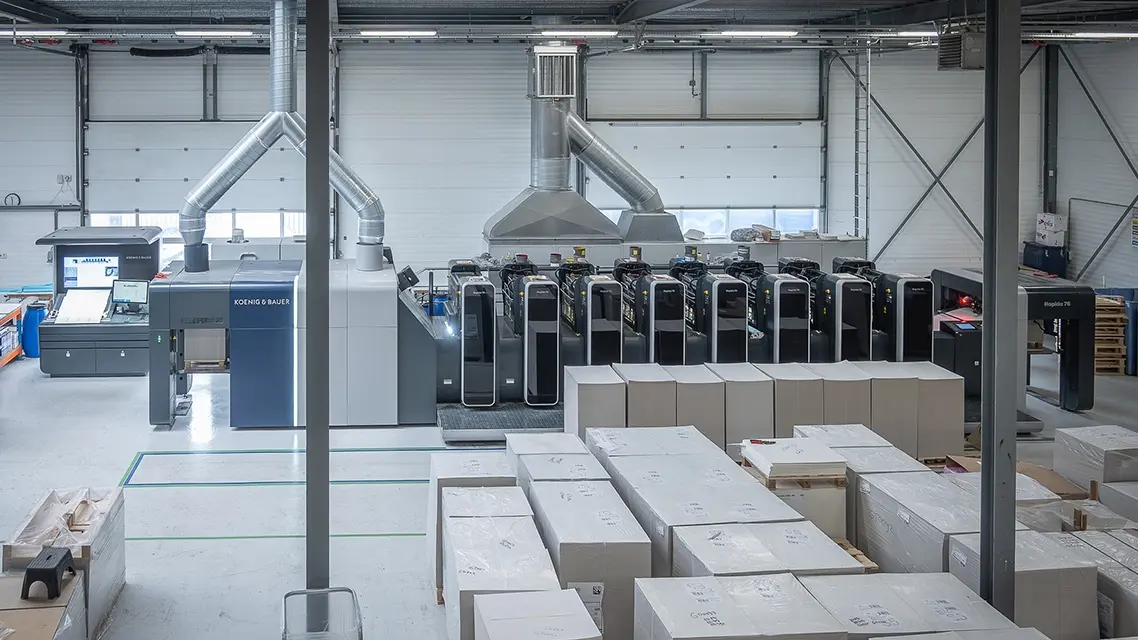
The Dutch folding carton specialist, Rutgers Printing & Packaging Solutions in Zoetermeer, is meeting the growing demand for sustainable packaging solutions with the installation of a Rapida 76 featuring seven printing units and a coating section. For the company, which concentrates on producing packaging for food and non-food products, the machine marks an important step into the future. Managing Director Oscar Pepermans confirms: “We are really taking a leap in terms of efficiency, productivity, and capacity.”
© Koenig & Bauer
Maximum performance through high automation
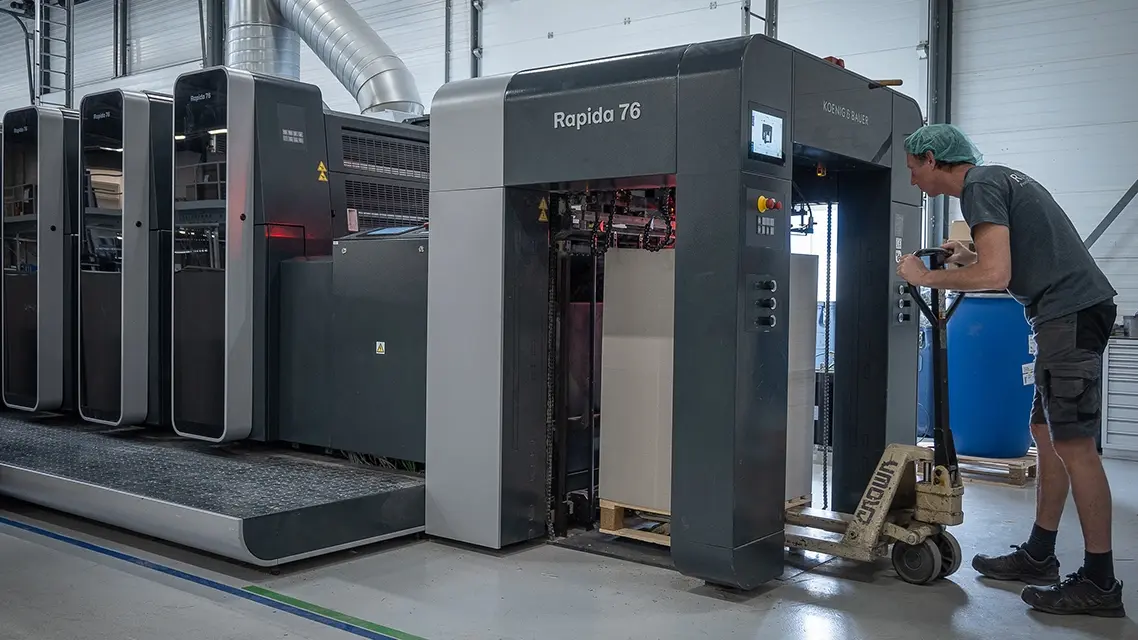
The Rapida 76 transfers further high-end technologies, familiar from the Rapida 106, to the B2 format class of 530(605) x 750 mm – especially for packaging production. This migration creates the basis for maximum efficiency in folding carton printing. This includes the increased maximum substrate thickness of 1 mm, a new feeder with an optional, automatic nonstop function, and machine raised heights of up to 450 mm, which allow for the processing of taller board stacks. The high level of automation and the internal measuring and control technology ensure stable, high print quality.
For Rutgers, in addition to the small measuring strip heights (just 4 mm), reliability was a central decision criterion. The new Rapida 76 also scores with speed and – thanks to short makeready times and automation – a significant increase in production capacity. The operators benefit from the high degree of automation, which significantly relieves them of routine tasks. This primarily involves the fully automatic, simultaneous plate change in all printing units, but also washing devices for parallel washing processes (CleanTronic Synchro), a lowerable nonstop carriage in the delivery, and measuring and control technology like QualiTronic ColorControl.

© Koenig & Bauer
Seven colours for Extended Colour Gamut production
A key efficiency driver is the option to use the Extended Colour Gamut (ECG). The seven-colour technology enables Rutgers to print with the basic colours and three supplementary colours, thereby covering an extremely wide colour spectrum. Pepermans explains: “Printing in the Extended Colour Gamut means it is no longer necessary to constantly change spot colours.” This simplification of processes brings a further significant boost in efficiency and reduces the amount of waste material needed. The print stability of the Rapida 76 is an indispensable prerequisite for precisely controlling the complex seven-colour workflow.
© Koenig & Bauer
The decision to opt for the Rapida 76 was made by Rutgers after extensive test prints at Koenig & Bauer in Radebeul, which created complete confidence in the new technology.
Interesting website: rutgerspps.nl

Martin Dänhardt
Marketing & Communications
+49 351 833 2580
Koenig & Bauer Sheetfed
Friedrich-List-Straße 47
01445 Radebeul